Friday, April 23, 2010

My prized catch of green Indonesian coffee from 4 different regions
Joseph Grenier's loaves baking in the Wachtel oven
Joseph Grenier in action
French baker from a Vietnamese flour mill
Baguette shaping in progress
Rolling the baguette
The baker from Ireks shaping baguettes
Pre-shaped Baguette dough resting in a tray
Miche from the same baker

FHA 2010-Part 2

I was fortunate to be able to attend FHA for the entire 4 day event. Here is the second installment, focusing on my 2 loves, bread and coffee. I had a first hand look at how a baguette was shaped by the baker from Ireks. Unfortunately, the bakers were often very busy and it was not possible to talk to them at length. However, a picture speaks a thousand words and just seeing them in action spoke volumes. I was happy that they were willing to share about the composition of the flours used in the breads that they were baking. It seems that they almost never use pure white flour.

Coming to my second love, coffee. I got myself a stash of green Indonesian coffee. 4 types were available at the booth that I visited. They were all organic grade 1 coffee from Lintong, Gayo, Timor and Toraja. I am looking forward to roasting them since nothing beats freshly roasted coffee. My experimental batch of Brazillian Santos coffee given to me by a kindly gentleman. He is a coffee expert whose whole life revolved around coffee and has been in the business for decades after learning from a Dutch Master Roaster. I gave a batch to my good friend and colleague and his comment was that he liked the beans because there was no harsh burnt note in them.

I fell in love with Indonesian coffee after trying out Mandheling and Toraja coffee. All these beans have interesting stories to tell but it is the full bodied richness of the coffee made from these beans that gets one hooked. So when I chanced upon a booth offering green Indonesian, I was delighted and they were equally happy that I had brought my trolley on the last day to scoop off my babies. This was because they came to the trade show without a trolley and the boss had to lug the 60kg of beans and spices as the rest of the staff were petite ladies.

Wednesday, April 21, 2010

King Crab
Live Abalone
Red Scorpion Fish
Gigantic Moon Fish and lobsters
Tuna
Salmon, Cod and other treasures from the sea
Kopi Luwak, the most expensive coffee in the world retailing at $62 for 100g
Truffles
Fine seafood selection

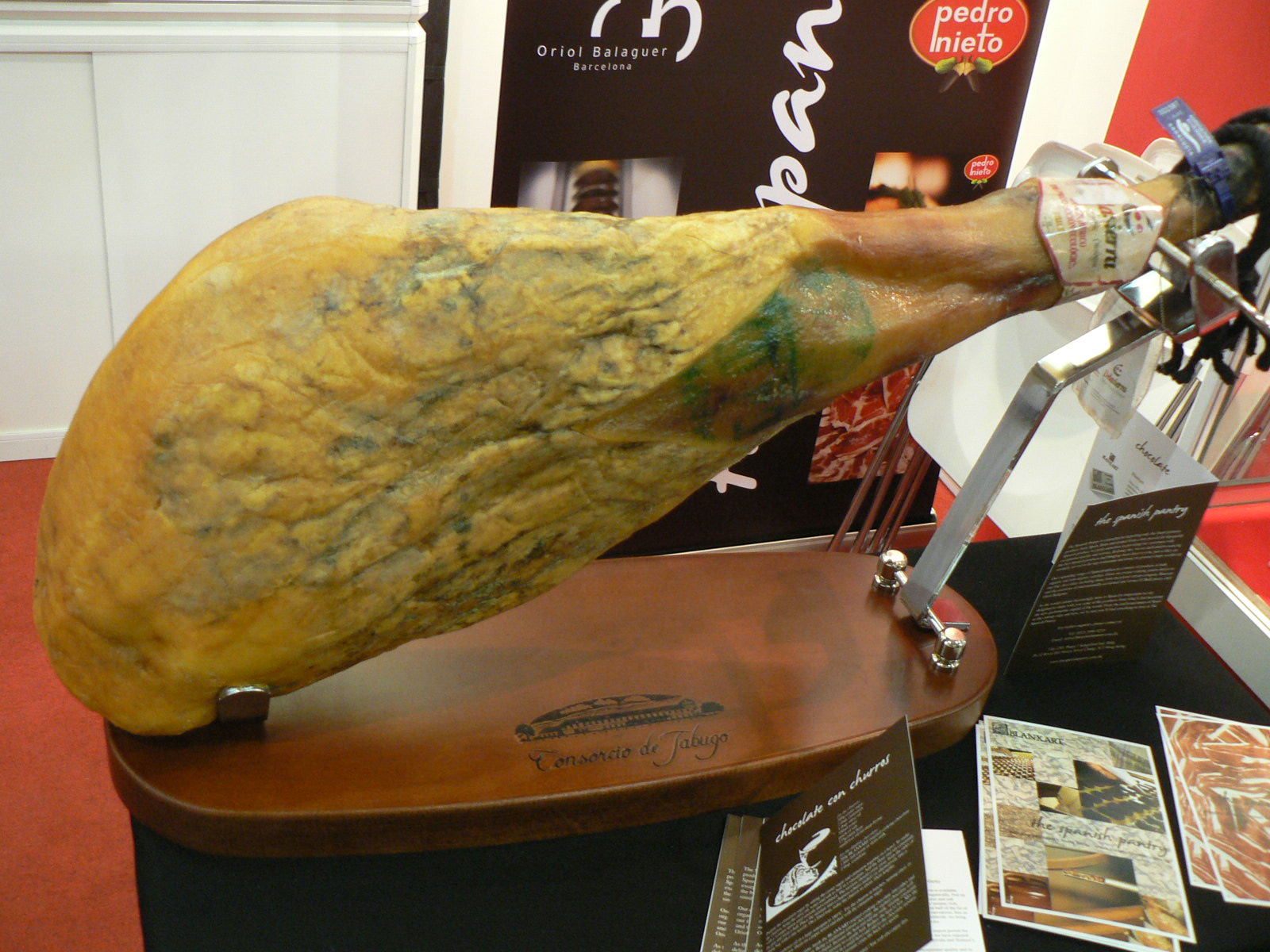
Jamon Iberico
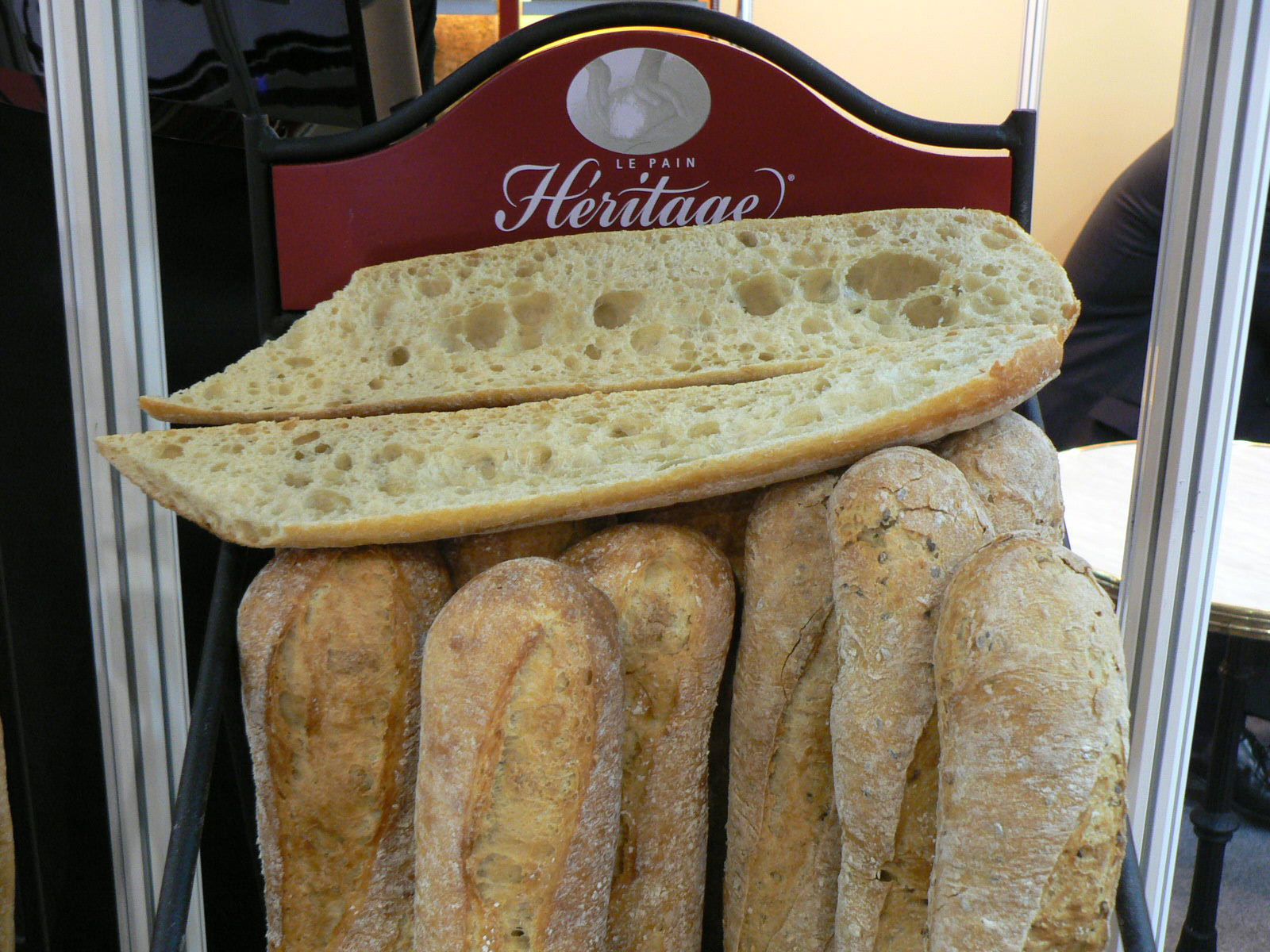
Surprise, surprise. Real good bread from Delifrance.
Dean Brettschneider
Selection of breads made by Dean
More breads from Dean
The friendly people from Tuksei Tezcan Flour, Fatih and associate.
The flour given to me to be tested soon.
Maasi Orimo San from Japan Salt Corporation


FHA 2010-part 1

Food Hotel Asia 2010 was finally here. Although I was expecting tickets, they arrived at the very last minute. This kept me on tenterhooks as I had promised to pass some to my group of dear baking friends. I was glad that I was able to fulfill my promise. The appreciation from this group of friends was reward enough.

I had a chance to see many bakers in action. I discussed the merits of different fermentation strategies with a German baker, Joseph Grenier and he told me that a recent trend was to have a prolonged final proof. He showed me the final proofing trays complete with lining and cover that facilitate stacking. From his explanation, there was no doubt that there was an advantage where logistics was concerned and the bake at the point of sale would guarantee that the customer gets the freshest bread.

A beautiful array of bread caught my attention and when I went to find who the skillful baker was, it turned out to be none other that Dean Brettschneider, the author of The Global Baker. Other celebrity chefs I met was the talented and funny Ryan Hong of Bespoke Dining. I was pleasantly surprised by the breads at Delifrance. The breads there were vastly different from those found in the retail outlets. It's a real pity that the breads at FHA are not available at the Delifrance outlets.

FHA was a great chance for me to talk to some Turkish millers. One miller I spoke to was Yuksei Tezcan Flour Co. The friendly Sales and Marketing Executive, Fatih Karabay gave me a kilo of flour to test when I told him about my bread baking passion. There had been some discussion on Turkish bread flour in the forums and I was very happy to get hold of some to do some testing on.

I am always on the lookout for top quality ingredients for my bread and since salt is such an important component of bread, I was happy to chance upon the Japan Salt Corporation. I had a fun time talking to Masaaki Orimo San, the General Manager of Saitama Branch. I had initially thought that it was all Japanese salt. I realised that the company carried special salt from all over the world, ranging from my regular Himalayan pink salt to Truffle flavored Guerande salt. I also recognized a bottle of Utah salt given to me by a friend.

Friday, April 16, 2010


Type 550 flour

I had a chance to try out European type 55 flour. The German classification is 550 which is an indication of the ash content of the flour. I had tried it out on baguettes and the result was acceptable as it was the first time I had used an European flour.

So far, I have been using mostly flour from the US. Typically, American flours absorb a lot more water and I had to modify my recipes significantly. This is one aspect of baking that is difficult to convey as the only way to know a dough is by getting your hands into it. I get emails from fellow home-bakers asking me about recipes and other aspects of baking. I try to answer as best as I can although deep in my heart, I know that these answers are far from adequate.

I know this by experience after reading and trying out the recipes by the well known masters. No matter how well written the instructions are, the chances of the bread turning out exactly as the author intended is slim. The reason is simple. The ingredients and environment are different. However, over time as one becomes more experienced, one will know what adjustments to make to increase chances of success.

Coming back to the flour, other than absorbing less water, I noticed that it was ground much finer than the Prima flour that I was using. For this bake, I wanted to see how it will fare with the addition of 40% WW. The pre-ferments for this bake was the entire WW portion plus 10% of my refreshed sourdough culture. The dough felt slack even though the hydration was a mere 70%. As usual, my bakes typically end late into the night and the lighting in my kitchen is less than ideal for good photographs. The consolation for this is the anticipation of sinking my teeth into a slice with a good cup of Sumatran Mandheling coffee the next morning.

Saturday, April 03, 2010


Hot Cross Buns

The many Easter breads posts in the forums inspired me to make some for Easter Sunday. Knowing my family's indifference to sweet bread, especially those laden with raisins, I was a little half-hearted when I made these. However, I plodded on because when you can't please everyone, you've got to please yourself.

I chose Dan Lepard's version of Stout flavored Hot Cross Buns posted in the Guardian.

Since I did not have Stout at home, I made do with some Sulawesi Toroja coffee that I had made earlier. Using coffee was also another clever tip I picked up from Dan's Black Pepper Rye bread.

On Easter morning, I woke up and made some more Toroja coffee and warmed up 4 buns for the family. The verdict from my daughter was positive but my son gave a cryptic remark saying that it was not as good as I thought it would be. I wonder what he meant by that as I have not said a single word about the outcome of the buns.


Strange Fruit

I was given a fruit to taste and identify. The golden fruit looked so pretty and delicious. I could imagine how it must have looked with a whole tree laden with the fruit.

When I cut it open, the flesh was reminiscent of soursop but the taste was new to me. It had a bright flavor which is very refreshing. The fruit had a large hard black seed and that was the clue. It reminded me of a Chiku(Sapote family) and since that fruit was originally from Central America, this fruit should be a relative.

Thanks to Google, I found that it was called a Canistel.


http://www.google.com/search?q=canistel&ie=utf-8&oe=utf-8&aq=t&rls=org.mozilla:en-US:official&client=firefox-a

ERRATUM
Following a lunch with my friend who gave me the fruit, I was promted to do a little more research on the fruit and I realized that it was not really a Canistel(Pouteria Campechiana) but something close. From the following website, it seem to be a Caimito or Abiu(Pouteria Caimito).

The difference was the color of the flesh. The Canistel had yellow flesh while the Abiu had white flesh. However, both are from the Sapote family and known to us in SEA as Buah Chiku. The Buah Chiku originate from South America so no surprises with the similarity there.

Abiu, Caimito
http://toptropicals.com/cgi-bin/garden_catalog/cat.cgi?uid=Pouteria_caimito

Canistel
http://toptropicals.com/cgi-bin/garden_catalog/cat.cgi?uid=Pouteria_campechiana

Saturday, February 06, 2010

Flour test Bacheldre whole-wheat flour


I have been out of action for a couple of months. After living with the defects in my house for decades, my wife and I decided that we have had enough with the defects in the house. The worst was having to live with leaks from the bathroom into the living room. Since we were going to endure the mess, we decided to bite the bullet and optimise the living areas once and for all.

What was supposed to be a month off baking ended up taking longer as I succumbed to the bad living conditions during the month long renovations. It took me a long time to recover. Fortunately, I had the care and concern of a few doctor friends who gave me advice and although they were not specialists in that field, provided me with supplements to help me along. I was also lucky to be treated by Prof Christopher Goh whose experience and cheerful demeanor always made me feel assured that I was going to be alright.

I have not been baking since Nov 21 and the arrival of a baking accessory which I had ordered from Unox spurred me into action. I had been waiting patiently for this magical Fakiro for 6 months and when it finally arrived, I lost no time in trying it out. True to its name, it worked beyond my expectations.

It was supposed to be the perfect bake but I was as little rusty. Although I was able to save the situation, I was not able to execute a critical step in the baking process. So it ended up looking ordinary. For this bake, I was able to try out Bacheldre Mills wholewheat flour given to me by a friend.

Saturday, November 21, 2009


Foccacia 

Another attempt at Dan's Foccacia. Since type 00 flour is not easily available, I was interested in finding a flour available locally that will do the job. It seems that just about any lower protein flour will make pretty good versions of the bread.

I was making this bread again as it was well received. My mother loved it and because it was so soft, my father had no trouble eating it. I was able to get a very good flavorful, open crumb. 

Sunday, November 15, 2009

Storing flour in the tropics.

I was told by a friend about the dangers of storing flours at room temperature in tropical Singapore. I remembered reading about this a couple of weeks ago. In the article, 1g of plain flour left out in the open can have as many as 1750 dust mites crawling in it. The problem is that even when dead, the mites can cause serious problems among asthmatics. This is because the bodies of these mites can still trigger asthma attacks even when the food is cooked at high temperatures.

For me, the preferred storage area for my flour is the freezer. The freezer is great, especially for wholemeal flours. At room temperature, the oils in the germ can turn rancid rapidly. However, this is greatly inhibited at freezer temperatures. I use up flour quite rapidly also as I bake very regularly and in larger quantities than most homebakers.

The following is a link to that article that appeared in the Straits Times.


Foccacia with Type 00 flour

After many rounds of the foccacia, I finally got to do the foccacia using the type of flour used in Dan Lepard's demo. The friend who gave it to me told me that it was the last bag at Culina. This was the reason why I couldn't just squander it. It had to take 3 practice bakes before I would contemplate using it. The dough smelled fragrant during the mix and now, I am wondering if it really was the flour that gave the bread that wonderful aroma.

I am really glad to have learnt first hand from Dan how this bread is made. It is a bread that will be welcomed in any party. Given the Singaporean preference for soft bread, it will surely be preferred to the other types of bread that I make.

Saturday, November 14, 2009


Dan Lepard Black Pepper Rye
I have been thinking of doing this bread ever since a friend in a bread forum posted his attempt. The recipe is from Dan Lepard's column in The Guardian. This bread is unusual in many aspects. Using coffee as the liquid is unusual in itself. Using it to boil part of the rye with the spices is another touch of brilliance. 

I used fennel as that was the only spice I had on hand. The resulting bread had a very interesting flavor. I believe it will go well with the toppings suggested in the column.

Update: We had it for breakfast this morning and everyone in the family gave it the thumbs up.

Sunday, November 08, 2009


Foccacia again.
Today's attempt is my third attempt at Dan's foccacia. I have been thinking about how I can improve on the previous 2 bakes. I was sure that it will work well this time. This time round, I followed the recipe to the letter. True enough, the bread turned out very well and I was able to bring it to another friend who was with me for coffee the other evening. I did not give him the sourdough version as it was really terrible. I mentioned that I will bring him a loaf the next time I baked so since I baked today, I had to make good my word.

The result was very encouraging indeed as the flavor was quite good. It was light and fluffy with very good crust texture. It even passed the severe home critics at home. I am sure the flavor will be more enhanced with a little more retardation.

 Staple Walnut Bread 1kg All purpose flour 800g Water 3 tsp salt 3 tsp yeast Bowl of walnuts Makes two large loaves Mix dry ingredients and ...